Sole Trader vs Limited Company: Which Is Better for Tax in the UK?
A practical guide for freelancers, contractors, and small business owners comparing sole trader tax, limited company tax benefits, admin responsibilities, and when incorporation may make sense.
Blog 11
Sole Trader vs Limited Company Tax: Which Structure Is Better in the UK?
Choosing between working as a sole trader and setting up a limited company is one of the biggest decisions a freelancer, contractor, or small business owner can make. The structure you choose affects how you pay tax, how much admin you have, how clients see your business, and how much personal risk you carry.
Many people start as sole traders because it feels simple. Others move into a limited company once profits grow, risk increases, or they want a more formal business structure. But from a tax point of view, the answer is rarely one-size-fits-all.
This guide explains sole trader vs limited company tax in plain English, including the main tax differences, limited company tax benefits UK businesses often consider, and the practical question many owners ask: should I set up a limited company?
If you already know you need help choosing or changing structure, you can compare our fixed-fee support on the SRZ Accountancy packages page.
What Is a Sole Trader?
A sole trader is a self-employed person who runs a business as an individual. You and the business are legally the same. You keep the profits after tax, but you are personally responsible for business debts and obligations.
Sole trader tax UK rules are usually simpler than limited company rules. You register for Self Assessment, keep records of business income and expenses, and report your profit on a tax return each year.
As a sole trader, you typically pay:
- Income Tax on your taxable business profits
- Class 4 National Insurance if profits exceed the relevant threshold
- VAT if your taxable turnover goes above the VAT registration threshold
For 2026/27, the standard Personal Allowance is £12,570. Income Tax is charged at 20%, 40%, and 45% depending on how much taxable income falls into each band. Self-employed Class 4 National Insurance is 6% on profits over £12,570 up to £50,270, and 2% above £50,270.
If you need help filing your tax return, our Self Assessment tax return service is designed for sole traders, landlords, contractors, and individuals who want accurate HMRC filing without the stress.
What Is a Limited Company?
A limited company is a separate legal entity. The company earns income, pays expenses, owns assets, and pays Corporation Tax on profits. As a director and shareholder, you may take money out through salary, dividends, or a combination of both.
This separation is one of the biggest differences. The company is not you personally. That can offer limited liability protection, although directors still have legal duties and personal guarantees can reduce that protection in some situations.
A limited company usually pays:
- Corporation Tax on company profits
- PAYE and National Insurance if it pays salaries
- Dividend tax personally when shareholders take dividends above the allowance
- VAT if taxable turnover exceeds the VAT registration threshold
For Corporation Tax years starting 1 April 2026, companies with profits under £50,000 pay the 19% small profits rate. Companies with profits above £250,000 pay the 25% main rate. Profits between those limits are subject to marginal relief, giving a gradual increase in the effective rate.
For more detail on reducing company tax legally, read our guide on ways to reduce Corporation Tax for limited companies.
Sole Trader vs Limited Company Tax: The Main Difference
The biggest tax difference is how profits are taxed.
A sole trader pays Income Tax and National Insurance on business profit, whether or not all the money is actually withdrawn from the business bank account. If the business makes a taxable profit, that profit belongs to you personally for tax purposes.
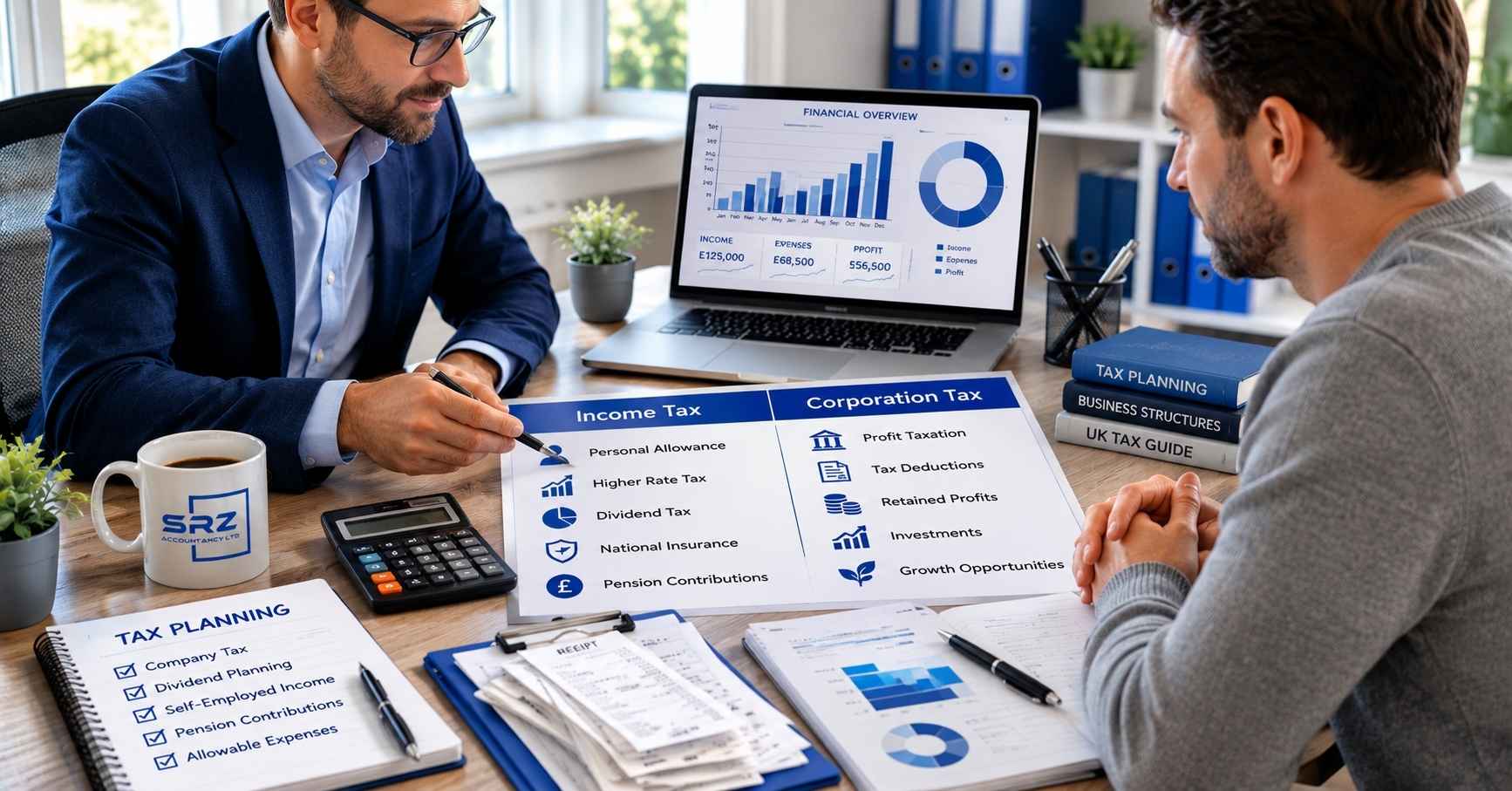
A limited company pays Corporation Tax on its profits. You then pay personal tax only when money is extracted from the company, usually through salary or dividends. This creates more planning options, but also more rules.
Example: A sole trader with £60,000 profit is taxed personally on that profit. A limited company with £60,000 profit pays Corporation Tax first, and the director then decides how much to take out as salary or dividends.
This is why limited companies can sometimes be more tax-efficient once profits grow. But the saving is not automatic. It depends on your income level, how much money you need personally, whether you have other income, and how much admin you are prepared to handle.
Limited Company Tax Benefits UK Business Owners Consider
The phrase “limited company tax benefits UK” is searched often, but it is important to understand what the benefits actually are. The main advantages are usually flexibility and planning, not a guaranteed lower tax bill for everyone.
Common limited company tax benefits include:
- Ability to take a mixture of salary and dividends
- Corporation Tax rates that may be lower than higher-rate Income Tax
- Option to leave profits in the company for future investment
- Potential pension contribution planning through the company
- More flexibility over the timing of personal withdrawals
- Separation between personal and business finances
Source: HMRC dividend tax rates for 2026/27. Updated 6 September 2026.
Dividend tax still matters. For 2026/27, the dividend allowance is £500. Above that allowance, dividend tax rates are 10.75% for basic rate taxpayers, 35.75% for higher rate taxpayers, and 39.35% for additional rate taxpayers. The company must also have enough post-tax profit to declare dividends legally.
When a Sole Trader Structure May Be Better
Sole trader status is often suitable when the business is simple, profits are modest, and you want fewer admin responsibilities. It can be especially practical when you are testing a business idea or working part-time alongside employment.
A sole trader structure may be better if:
- You are just starting out
- Your profits are relatively low
- You want simple reporting
- You do not need limited liability
- You want direct access to business profits
- You do not want Companies House filing duties
The trade-off is that you are personally responsible for the business. If the business has debts, legal claims, or unpaid bills, they can become your personal problem. That risk becomes more important as the business grows.
When a Limited Company May Be Better
A limited company may become more attractive when profits rise, commercial risk increases, or clients expect to work with an incorporated business. It can also support a more professional structure when you are hiring, seeking finance, or building a long-term brand.
A limited company may be better if:
- Your profits are growing
- You want more tax planning flexibility
- You do not need to withdraw all profits personally
- You want limited liability protection
- You work with larger clients or agencies
- You plan to employ staff or build a larger business
- You want clearer separation between business and personal finances
However, limited companies come with more administration. You must keep proper company records, file accounts, submit a Company Tax Return, maintain statutory records, and manage director and shareholder paperwork correctly.
Good records matter whichever structure you choose. Our bookkeeping services for small businesses help keep income, expenses, VAT records, and year-end information organised throughout the year.
Should I Set Up a Limited Company?
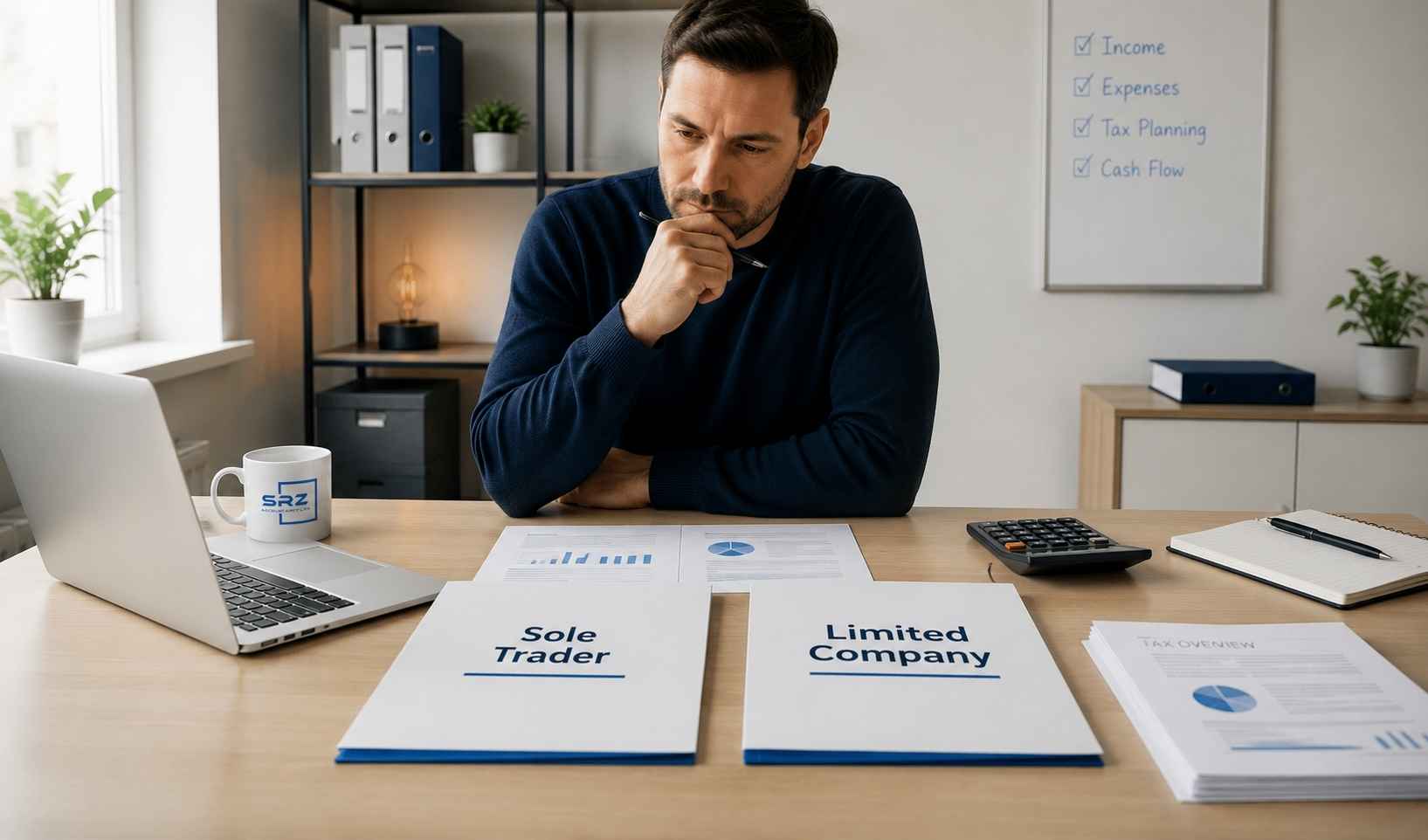
If you are asking “should I set up a limited company?”, start with your profit level, risk, growth plans, and how much income you need personally.
Useful questions to consider:
- How much profit do I expect this year?
- Do I need to take all profits out for personal living costs?
- Am I paying higher-rate tax as a sole trader?
- Does my work carry legal or financial risk?
- Will clients expect me to trade through a company?
- Am I comfortable with extra admin and filing requirements?
- Would a company pension contribution strategy help?
- Do I need help with payroll, dividends, VAT, or bookkeeping?
If the business is still small and simple, staying as a sole trader may be perfectly sensible. If profits are rising and you want more flexibility, a limited company may be worth exploring.
Admin and Compliance: Do Not Ignore the Extra Work
Tax is only one part of the decision. Limited companies require more compliance than sole traders. That does not mean they are unsuitable, but it does mean you need proper systems in place.
A sole trader usually files one Self Assessment tax return each year. A limited company may need annual accounts, a Company Tax Return, confirmation statements, director payroll, dividend records, bookkeeping, and sometimes VAT returns.
This is where fixed-fee accountancy support can make the decision easier. Instead of dealing with every filing separately, you can choose a package that covers the level of support your structure needs. See our fixed-fee sole trader packages, contractor packages and limited company accounting packages.
Can You Change From Sole Trader to Limited Company Later?
Yes. Many business owners start as sole traders and incorporate later once the business is more established. This can be a sensible route because it avoids taking on company admin before the business needs it.
When changing structure, you need to think about:
- Registering the company with Companies House
- Transferring business assets or contracts
- Opening a company bank account
- Updating invoices and client agreements
- Registering for Corporation Tax
- Setting up payroll if you pay yourself a salary
- Handling VAT registration correctly if already VAT registered
It is worth planning the timing carefully so the change does not create confusion in your records or unexpected tax issues. Understanding how tax works in the UK across different structures is a useful starting point before making the switch.
Final Thoughts
Sole trader vs limited company: which is better for tax in the UK? A sole trader structure is usually simpler and easier to run. A limited company can offer tax planning flexibility, limited liability, and a more formal business structure, but it also comes with more admin and compliance requirements.
The best choice depends on your profits, risk, cash needs, plans for growth, and how comfortable you are with company responsibilities. For many freelancers and small business owners, the right answer changes over time.
At SRZ Accountancy, we help sole traders, contractors, and limited companies choose the right structure, keep records organised, and stay compliant with HMRC and Companies House. If you are unsure which applies to you, it can also help to understand how to pay less tax legally regardless of your structure.
If you are unsure which structure is right for you, book a free consultation or explore our fixed-fee accounting packages.
Book your free consultation
The best way to find out how we can help is a quick conversation. Tell us about your situation — your goals, your challenges, your current accountancy needs. The first meeting is always free, with no obligation and no sales pressure.