
How Tax Works in the UK (2026 Guide)
A clear guide to how tax is collected, when you need to register, and what employees, sole traders, landlords, freelancers, and limited companies need to know in 2026.
Blog 09
How Tax Works in the UK: A Plain-English Guide for Employees, Self-Employed, Landlords, and Limited Companies
Tax in the UK is not one single charge. It is a framework covering several different taxes—each with its own rules, rates, and deadlines. Income Tax, National Insurance, VAT, Corporation Tax, and others all run alongside each other, and many people deal with more than one at the same time without fully realising it.
A company director, for example, may be dealing with Income Tax, National Insurance, Corporation Tax, and VAT all at once. A landlord with a day job pays Income Tax on both their salary and their rental profits. A sole trader pays both Income Tax and National Insurance on the same earnings.
Understanding how each tax works—and when it applies to you—makes it far easier to plan ahead, avoid penalties, and make sure you are not paying more than you need to. For a detailed breakdown of every allowance and threshold, our UK tax rates and allowances guide covers 2026/27 alongside historical 2024/25 and 2025/26 figures.
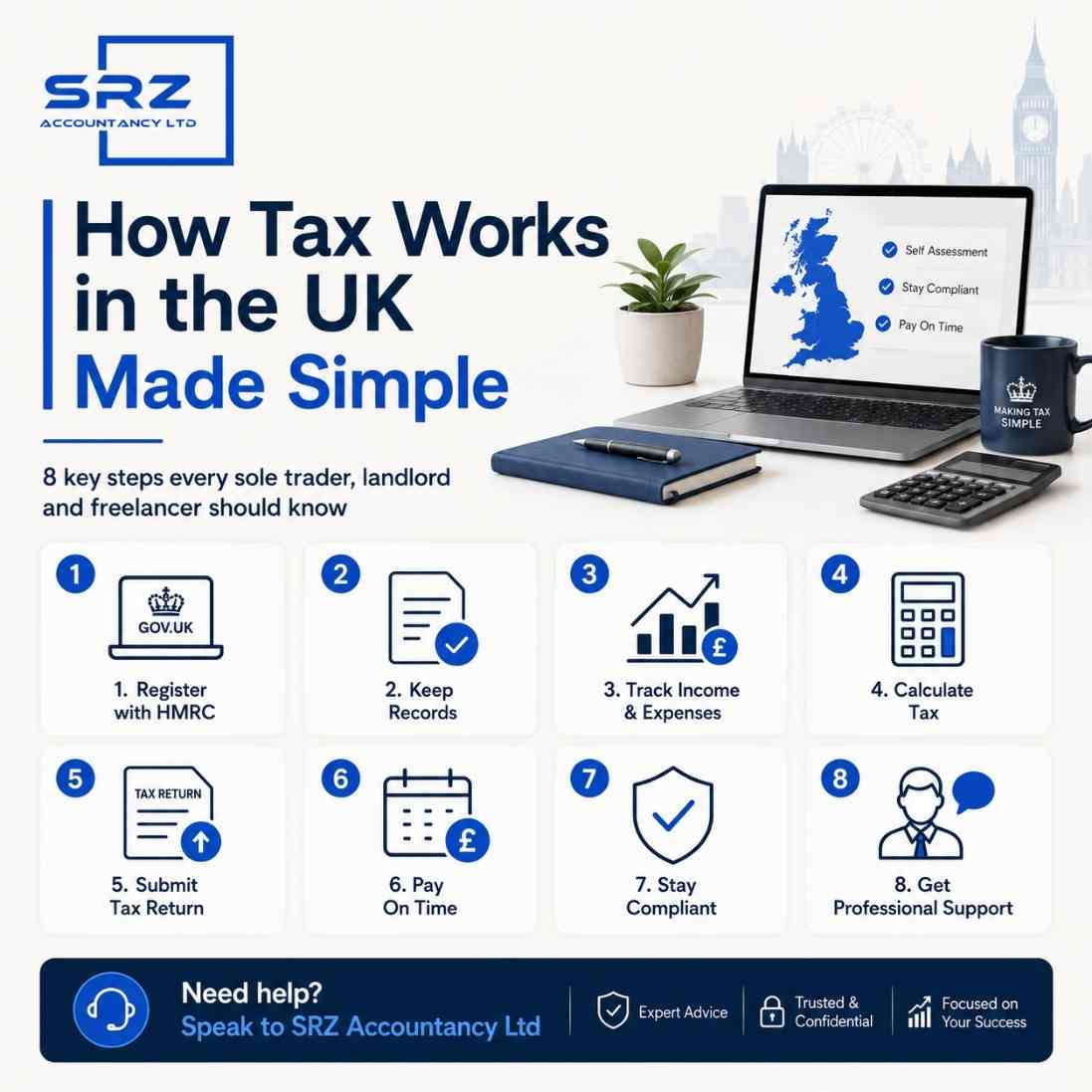
What you’ll learn in this guide
By the end of this article, you’ll understand:
- How the UK tax year works and when key deadlines fall
- The difference between PAYE and Self Assessment
- Which taxes apply to employees, sole traders, landlords, and limited companies
- The Income Tax bands and rates for 2026/27
- How National Insurance, VAT, Corporation Tax, and dividend tax work
- The record-keeping habits that help you avoid penalties
How the UK tax year works
The UK tax year runs from 6 April to 5 April the following year. It does not follow the calendar year, and this catches many people out.
The current tax year is 2026/27, running from 6 April 2026 to 5 April 2027. Most people pay tax either as they earn through PAYE, or by submitting a tax return after the year ends through Self Assessment.
HM Revenue & Customs (HMRC) administers the tax system and sets the rules. They can issue penalties for late filing, late payment, and incorrect returns.
PAYE vs Self Assessment — what’s the difference?
PAYE (Pay As You Earn) is used by most employees and pensioners. Tax is calculated and deducted automatically by the employer or pension provider before you receive your pay. You normally do not need to file a return unless HMRC asks, or your income situation is more complex.
Self Assessment is used by the self-employed, landlords, company directors, and anyone with income that PAYE does not cover. You file your own tax return each year, declaring your income and working out how much tax you owe.
Key Self Assessment deadlines (see our Self Assessment deadlines guide for the full picture):
- 5 October: Register for Self Assessment if you are new to it
- 31 October: Paper return deadline
- 31 January: Online return deadline and tax payment deadline
Income Tax (2026/27)
Income Tax is the most common tax in the UK. It applies to earnings from employment, self-employment profits, pensions, rental income, and some other sources.
UK Income Tax bands for 2026/27 (England, Wales, and Northern Ireland):
- Personal Allowance: Up to £12,570 — 0%
- Basic Rate: £12,571 to £50,270 — 20%
- Higher Rate: £50,271 to £125,140 — 40%
- Additional Rate: Above £125,140 — 45%
Two things to be aware of:
- The Personal Allowance reduces by £1 for every £2 you earn above £100,000, and disappears entirely at £125,140.
- Scotland sets its own Income Tax rates and bands, which differ from the rest of the UK.
Example: If you earn £35,000 a year, you pay no tax on the first £12,570. The remaining £22,430 is taxed at 20%, giving an Income Tax bill of around £4,486 before any other deductions.
National Insurance
Source: HMRC employer rates and thresholds. Updated 6 September 2026.
National Insurance (NI) is separate from Income Tax, but it is paid on top of it by most working people. It funds the NHS, the State Pension, and certain benefits.
For employees in 2026/27, Class 1 NI rates are:
- 8% on earnings between £12,570 and £50,270
- 2% on earnings above £50,270
Employers pay an additional NI contribution on top of what employees pay, normally 15% above the £5,000 annual Secondary Threshold in 2026/27; category-specific reliefs and Employment Allowance may apply. For businesses managing payroll, our payroll services for UK employers ensure NI calculations, RTI submissions, and year-end filings are handled accurately.
For the self-employed, Class 4 NI applies:
- 6% on profits between £12,570 and £50,270
- 2% on profits above £50,270
Key point: Income Tax and National Insurance are both charged on the same earnings but calculated separately. A basic rate employee earning £40,000 pays 20% Income Tax and 8% NI on the same slice of income, so the combined rate on earnings above the Personal Allowance is closer to 28%, not 20%.
VAT (Value Added Tax)
VAT is a tax on the sale of most goods and services. If your business is VAT-registered, you charge VAT on top of your prices, collect it from customers, and pay it to HMRC.
VAT rates in 2026:
- Standard rate: 20% — applies to most goods and services
- Reduced rate: 5% — applies to certain goods, such as domestic energy
- Zero rate: 0% — applies to most food, children’s clothing, and books
VAT registration threshold: You must register for VAT when your taxable turnover exceeds £90,000 in any rolling 12-month period. You can also register voluntarily if your turnover is below this.
Once registered, you must:
- Charge VAT on applicable sales
- Submit VAT returns, usually every quarter
- Keep VAT records for at least six years
Example: A plumber charges £5,000 for a job. If VAT-registered, they add 20%, so the total invoice is £6,000. The £1,000 VAT collected is then paid to HMRC, less any VAT the plumber has paid on their own business purchases.
If managing VAT feels complex, our VAT return support for small businesses handles registration, quarterly returns, and scheme selection on your behalf.
Corporation Tax
Corporation Tax applies to the profits of limited companies. It is not paid by sole traders or partnerships—they pay Income Tax on their profits instead.
Corporation Tax rates for 2026:
- Small profits rate: 19% on profits up to £50,000
- Main rate: 25% on profits above £250,000
- Marginal relief applies to profits between £50,000 and £250,000, giving an effective rate between 19% and 25%
Key points about Corporation Tax:
- It is charged on profits, not on turnover
- The tax year for a company follows its accounting year, not the April-to-April tax year
- Corporation Tax is due 9 months and 1 day after the end of the accounting period
- The Company Tax Return must be filed within 12 months of the accounting period end
Example: A company with £80,000 in profits pays Corporation Tax at an effective rate between 19% and 25% after marginal relief is applied—not simply the flat 25% rate.
For practical strategies on keeping your bill as low as legally possible, our dedicated guide covers 12 ways to reduce Corporation Tax for limited companies.
Dividends and tax on investment income
Source: HMRC dividend tax rates for 2026/27. Updated 6 September 2026.
If you own shares in a company—including your own limited company—you may receive dividends. Dividends are taxed separately from earnings and at different rates.
Dividend Tax rates for 2026/27:
- Dividend Allowance: £500 — tax-free for all taxpayers
- Basic rate taxpayer: 10.75%
- Higher rate taxpayer: 35.75%
- Additional rate taxpayer: 39.35%
Dividends received within an ISA are always tax-free, regardless of the amount.
Interest income from savings also has its own tax-free allowance:
- Basic rate taxpayers: up to £1,000 in savings interest — tax-free
- Higher rate taxpayers: up to £500 — tax-free
- Additional rate taxpayers: no allowance
Capital Gains Tax (CGT)
CGT applies when you sell or give away an asset that has gone up in value. Common examples include shares held outside an ISA, a second property, or business assets.
Annual CGT Allowance for 2026/27: £3,000 (tax-free)
CGT rates above the allowance:
- Basic rate taxpayers: 18% on residential property, 10% on other assets
- Higher and additional rate taxpayers: 24% on residential property, 20% on other assets
Your main home is usually exempt from CGT under Private Residence Relief, as long as you have lived in it throughout your ownership. The exemption reduces if you have let the property out or used part of it exclusively for business.
How the taxes add up — real-world examples
It helps to see how these taxes combine in practice.
An employee earning £50,000:
- Income Tax: approximately £7,486
- National Insurance (Class 1): approximately £3,018
- Total deductions: approximately £10,504
A sole trader with £40,000 profit:
- Income Tax: approximately £5,486
- Class 4 National Insurance: approximately £1,653
- Total: approximately £7,139
Example: A limited company director who takes a low salary of £12,570 and draws the rest as dividends often pays less overall tax than a sole trader on the same income. The exact saving depends on individual circumstances and requires proper planning.
Good record-keeping habits
The best way to avoid penalties and stay on top of your tax position is to keep clear records from the start. Good habits make year-end filing much quicker and less stressful.
Useful habits include:
- Keeping all receipts and invoices, both digital and paper
- Recording income and expenses regularly—not just in January
- Using accounting software to reduce errors and save time
- Storing records for at least five years, or six years for VAT records
- Telling HMRC promptly when your income or circumstances change
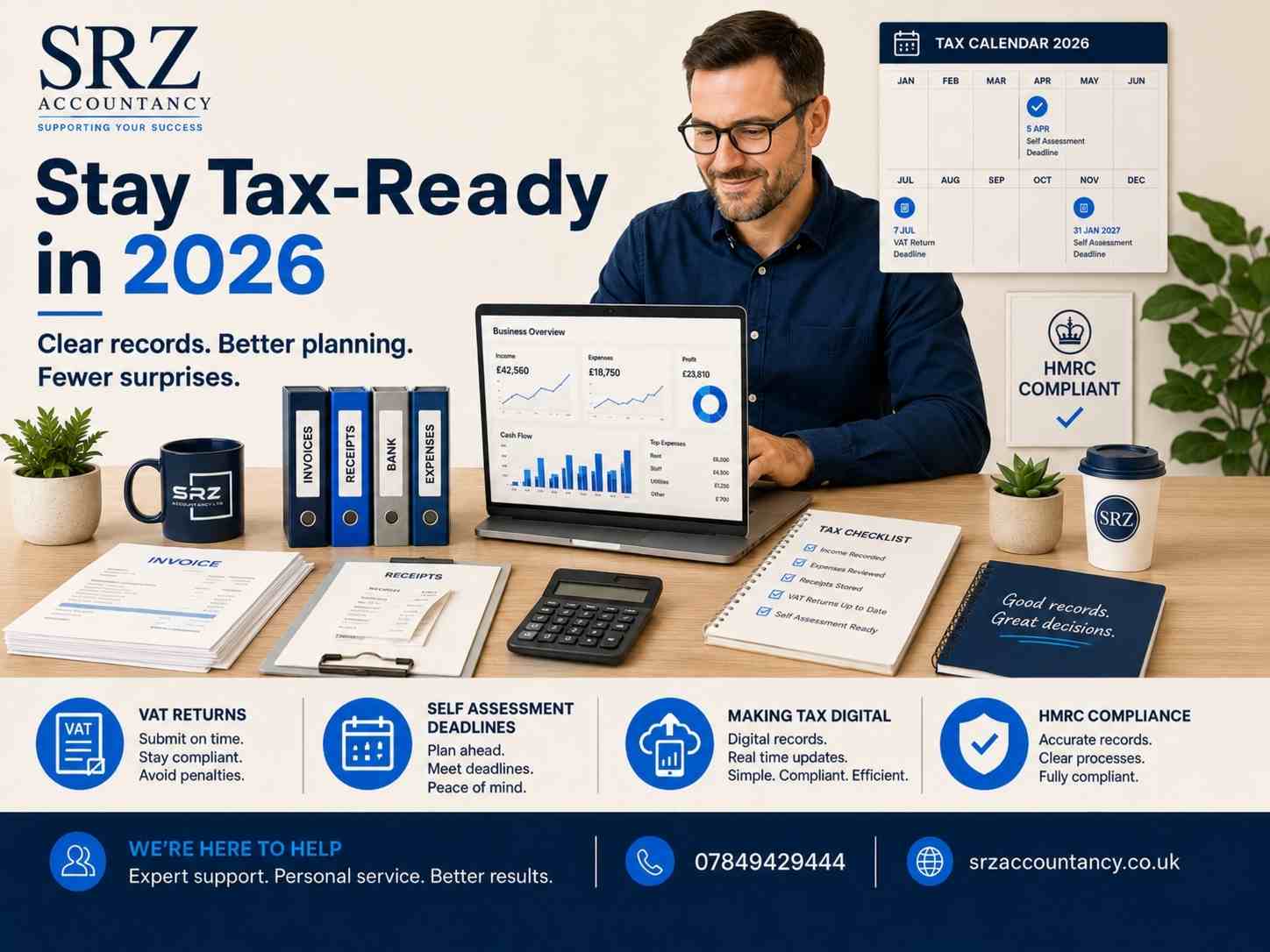
From April 2026, Making Tax Digital (MTD) for Income Tax will require most self-employed people and landlords with income above £50,000 to keep digital records and submit quarterly updates to HMRC, rather than a single annual return. Our guide to MTD for Income Tax 2026 explains exactly who is affected and how to prepare without disruption.
Final thoughts
Tax in the UK is layered, but it becomes much easier to manage once you understand how each part works and which ones apply to you. The key is not to wait until a deadline is approaching. Planning throughout the year, keeping good records, and getting advice when your income or circumstances change will help you stay compliant and in control.
At SRZ Accountancy, we help individuals and businesses across all of these areas—from Self Assessment and payroll to VAT returns and Corporation Tax. To find the right level of support, explore our accounting packages or book a free consultation with us.
Book your free consultation
The best way to find out how we can help is a quick conversation. Tell us about your situation — your goals, your challenges, your current accountancy needs. The first meeting is always free, with no obligation and no sales pressure.