
Understanding Your Tax Code: A Clear Guide for UK Taxpayers (2026/27)
Your tax code affects how much Income Tax is taken from your wages or pension. Here’s how to read it, spot emergency codes, and fix problems quickly.
Blog 08
What Your Tax Code Means, Why It Changes, and What to Do If It Looks Wrong
Your tax code tells your employer or pension provider how much tax to deduct before paying you. It may look like a random mix of letters and numbers, but it has a big impact on your take-home pay.
If the code is wrong, you can end up paying too much tax (and waiting for a refund) or too little tax (and facing an adjustment later). That’s why checking your code regularly is one of the simplest financial checks you can make.
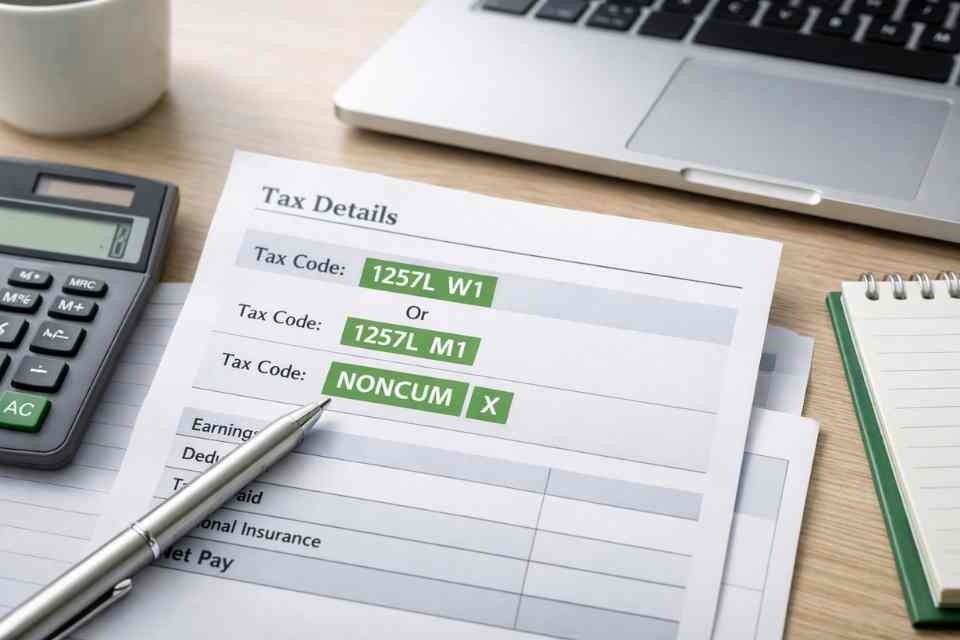
What is a tax code?
A tax code is issued by HM Revenue and Customs (HMRC) and sent to your employer or pension provider. It helps calculate how much Income Tax should be taken through PAYE.
The most common UK tax code for many people in the 2026/27 tax year is 1257L.
- 1257 usually reflects the standard Personal Allowance (£12,570), with the last digit removed.
- L typically means you are entitled to the standard Personal Allowance.
To understand how the Personal Allowance and Income Tax bands interact, our guide to UK tax rates and allowances explains each threshold in plain English.
Why your tax code can change
Your code is not fixed forever. HMRC can update it when your income or circumstances change. Common reasons include:
- Starting or leaving a job
- Taking an extra job or pension
- Receiving taxable benefits (for example, a company car)
- Changes in State Pension amounts
- Claiming Marriage Allowance or transferring it to a partner
- Claiming eligible work-related expenses
- Collecting underpaid tax from a previous year through PAYE
Tip: If your income has changed recently, do not assume your code updated automatically. Check your payslip and HMRC account.
Your tax code only covers income taxed through PAYE. If you also have self-employed, rental or other untaxed income, you may need to report it on a Self Assessment return instead. Our Self Assessment tax return service can prepare and file it for you.
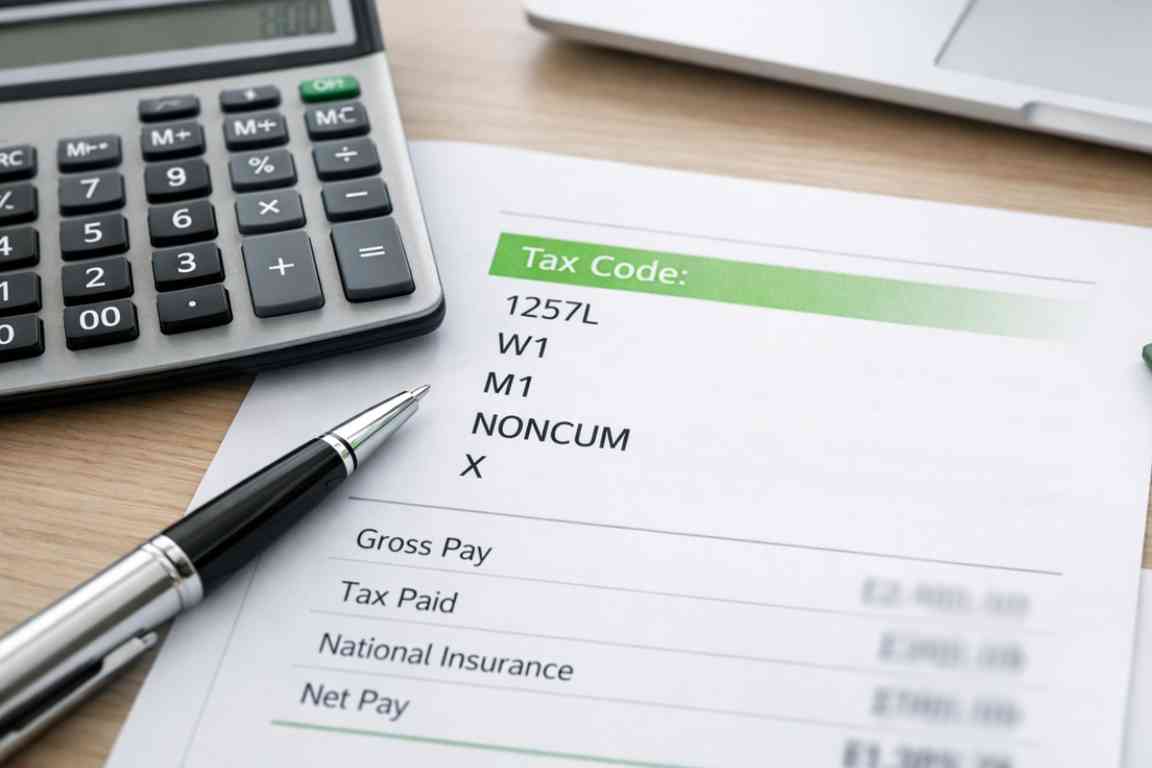
Emergency tax codes: W1, M1, X and NONCUM
If your code ends with W1, M1, or X, you are usually on an emergency basis. Some payroll systems show this as NONCUM.
Emergency coding often appears when you start a new job and your employer does not yet have complete pay and tax details. Tax is calculated only for that pay period, not cumulatively for the full tax year, which can temporarily overcharge or undercharge you.
How to avoid staying on emergency tax too long
- Give your new employer your P45 as soon as possible.
- If you do not have one, ask your previous employer for it.
- Check your payslip after the first few payroll runs.
- If your code still looks wrong after several weeks, contact HMRC or ask your accountant to review it.
Common tax code letters explained
- L: Standard Personal Allowance
- M / N: Marriage Allowance transfer received / given
- T: HMRC has included additional calculations
- 0T: No Personal Allowance available against this income
- BR / D0 / D1: All income taxed at basic / higher / additional rate
- NT: No tax deducted on that income source
- S or C prefixes: Scottish or Welsh tax rules applied
What does a K tax code mean?
If your code starts with K, it usually means taxable income or benefits not taxed elsewhere are greater than your Personal Allowance. Examples include benefits in kind, State Pension adjustments, or collecting tax owed from earlier years.
With K codes, there are safeguards—PAYE deductions cannot take more than half of your pre-tax pay in a period. If underpaid tax is being collected through your code, it may also be worth reviewing whether there are legal ways to reduce your tax bill going forward.
How to check if your code is right
You can usually find your code on:
- Your payslip
- Your P60 (year-end summary)
- Your P45 (when leaving a job)
- Your HMRC notice of coding (P2)
- Your HMRC online account or app
If details are outdated—income, benefits, second job, pension—update HMRC as soon as possible so corrections can be issued quickly. If you want to understand the broader picture of how Income Tax, National Insurance, and PAYE all connect, our plain-English guide to how tax works in the UK is a helpful read.
Final thoughts
Your tax code is one of the most important lines on your payslip. Understanding it helps you stay in control, avoid surprises, and make sure the right amount of tax is paid throughout the year. If you have multiple income sources not fully covered by PAYE, you may also need to complete a Self Assessment tax return—something our team can manage on your behalf.
If you want us to review your PAYE position, multiple income sources, or an emergency tax code issue, book a free consultation with SRZ Accountancy.
Book your free consultation
The best way to find out how we can help is a quick conversation. Tell us about your situation — your goals, your challenges, your current accountancy needs. The first meeting is always free, with no obligation and no sales pressure.